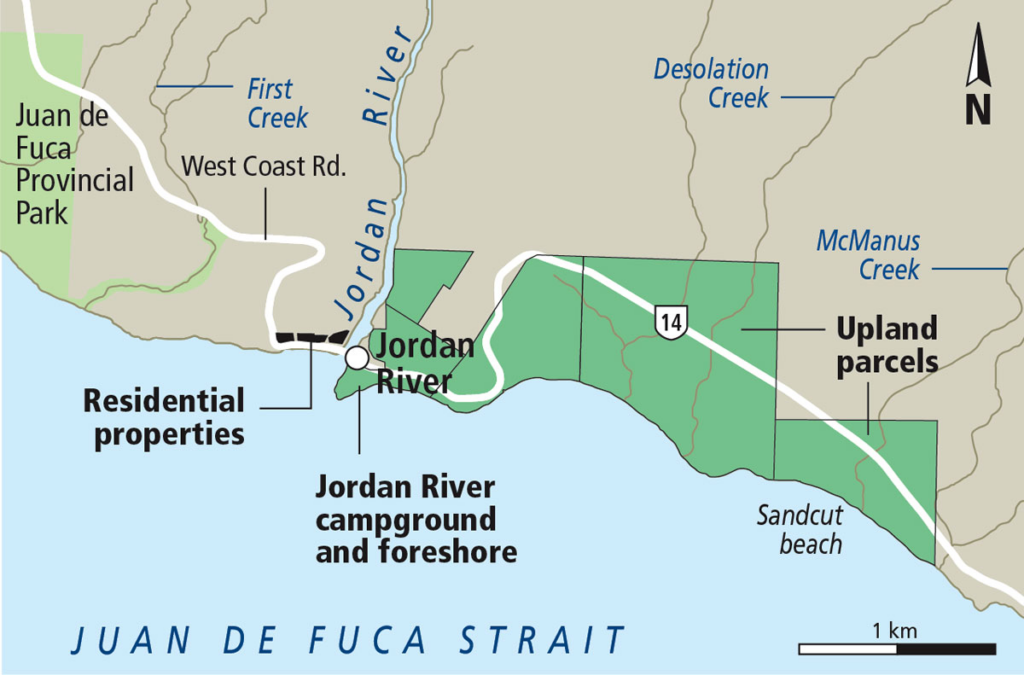
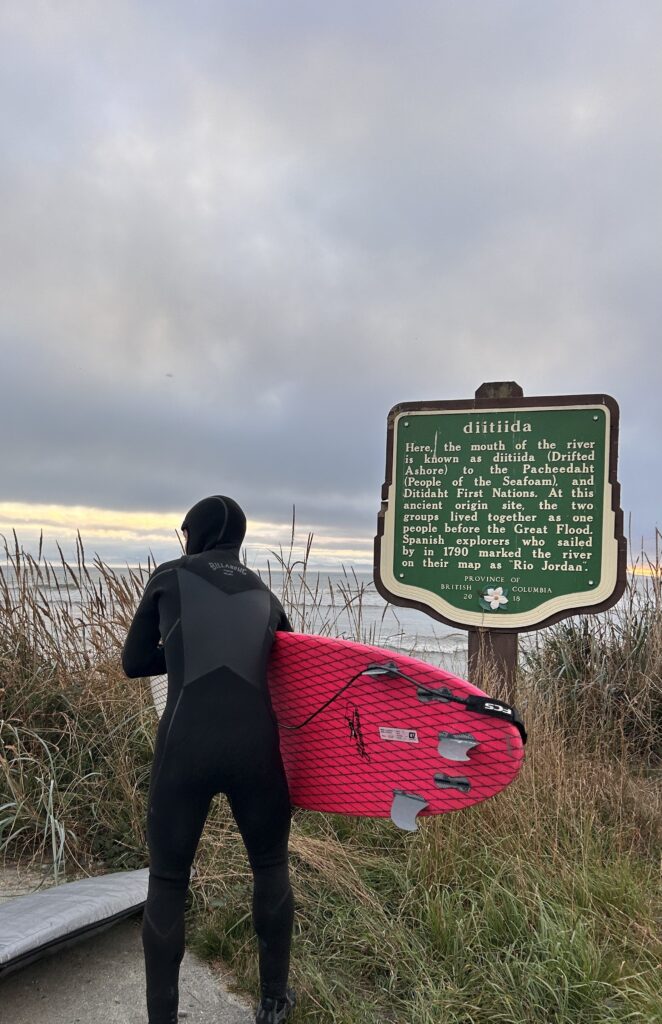
Jordan river lies on the southwest coast of Vancouver Island, emptying into the strait of Juan de Fuca, spanning roughly 165km² before entering the pacific ocean. The river is known traditionally as Diitiida (or di:ti:dah) by the Pacheedaht First Nation, and has supported thriving salmon populations, providing a large seasonal harvest for the Pacheedaht people. Elders describe times when “you could almost kick the salmon out of the water,” and some estimate that at certain peaks the lower river alone had upwards of 10,000 salmon, however, the 20th century introduced industrial changes that dramatically altered the rivers ecosystem resulting in what it is today.
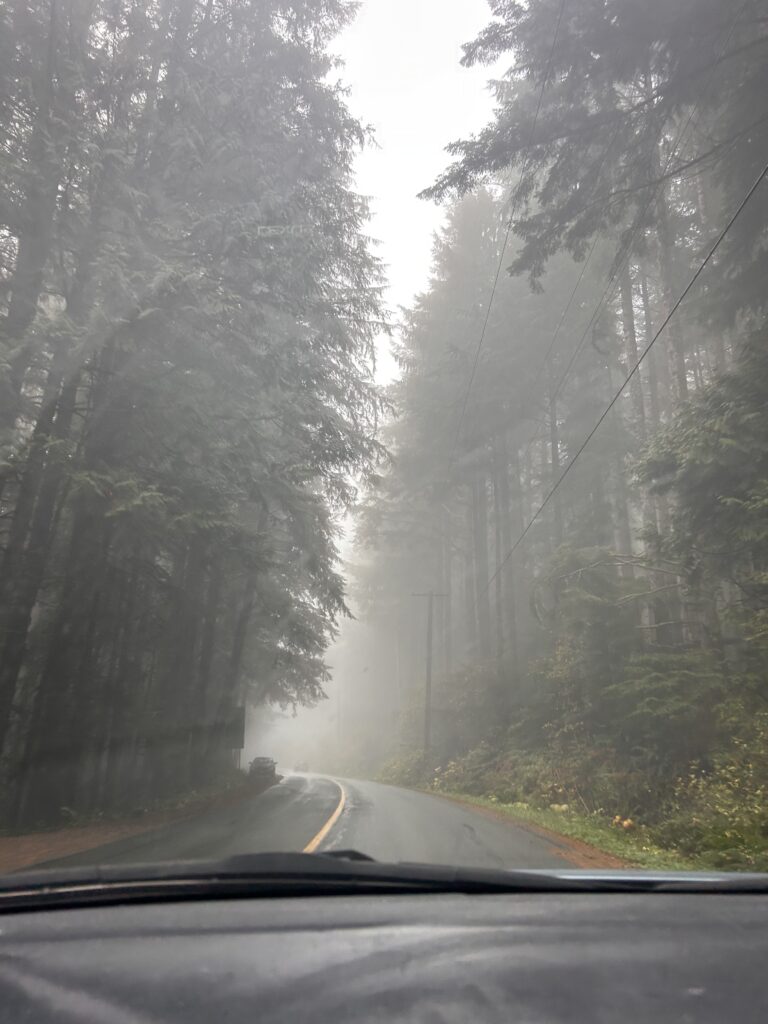
Jordan River lies within what BC Hydro defines as the Coastal Western Hemlock biogeoclimatic zone, which is characterized by lots of rain, cool summers, mild winters, and dense coniferous rainforest. Coniferous means forests made up evergreen, hemlock, fir, and cedar trees, these trees have needles instead of leaves and stay green year round as they are adapted to the cool climate of BC.
Jordan River might seem prestine and is known for its scenery and surf, but the landscape has faced serious challenges over the years. The first hydroelectric facility was installed in 1911, altering the rivers flow and capacity for fish runs, and decades of logging and mining (copper/gold) operations leached contaminants into the river. As stated by Jamie Constable of the Watermark Project, “at the time of operation of the mine, waste rock/tailings piles were permitted to be stored alongside the river and I determined in my research that these extensive piles that still exist today in the lower portion of the river above the salmon beds are one of the principal sources of contamination” (2016-2025). As a result of the contamination from the combination of the power generation, mining, and forestry industries, the once abundant spawning river is now a “basically dead. and if its not dead, its definitely on its last legs” says Wayne Jackman, a longstanding advocate for Jordan River and Salmon conservation.
Jordan River is an especially important example for outdoor education as it shows a real conflict between our natural environment and the impacts of technology on it. This same technology that powers Vancouver Island also played a major role in destroying the rivers salmon runs and damaging the watershed. In this case, “technology” is not digital, but industrial, and has reshaped the environment in ways that limit the ecosystems that are so important for students to experience.
Jordan River can open up important discussions with students, such as, what are the trade offs between resource use and environmental protection, where and how do we draw the line? How do we balance what people need with what ecosystems need? And how might we use technology today in a way that supports restoration rather than repeating mistakes? This way the damage done becomes a starting point for meaningful conversation and deeper learning, inspiring students to care for our planet, and encouraging them to think about how harm to local ecosystems affects their own homes.
Sources: